Cinematic Frame Interpolation
Investigating the space between film frames using classical optical flow algorithms and perceptual evaluation.
Overview
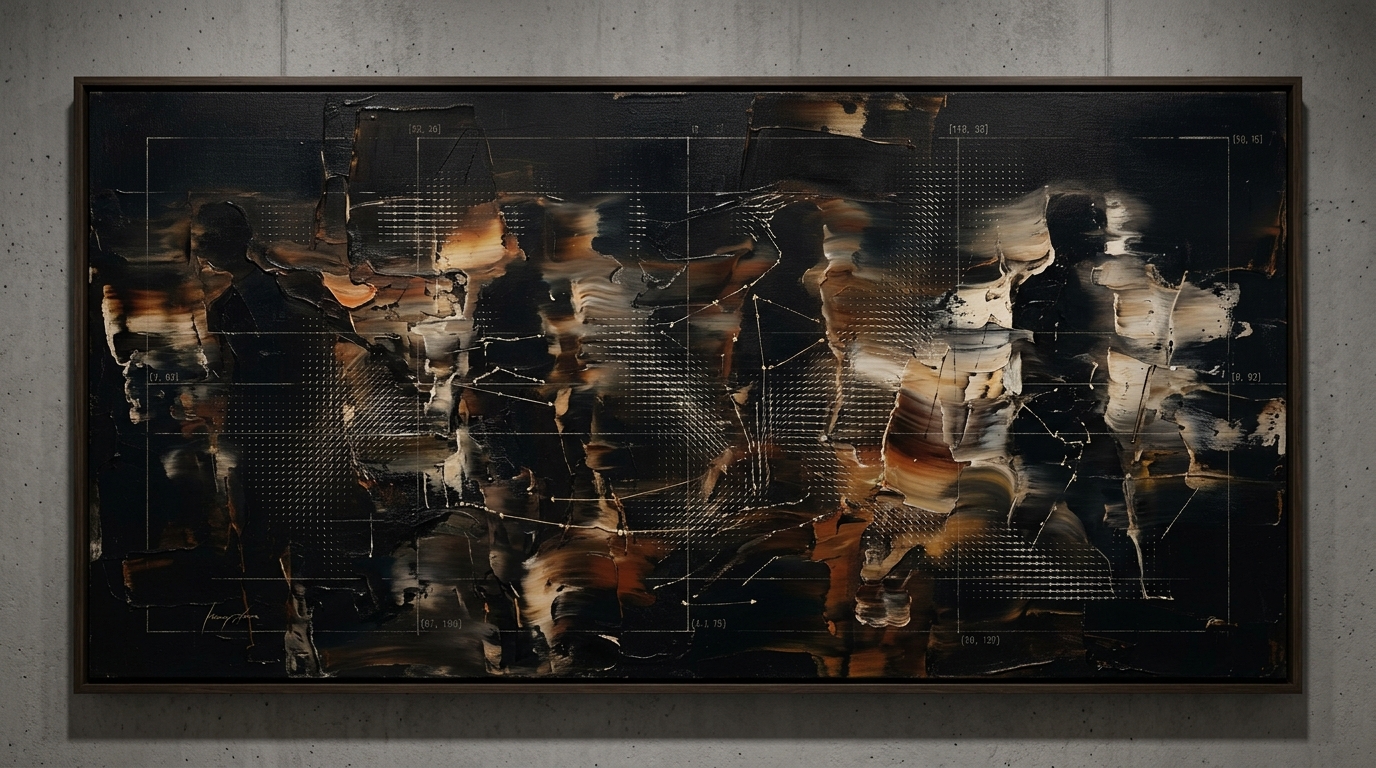
CHAPTER 01 / INTENTWhat occurs in the imperceptible space between two frames of cinema? This experiment dissects the mechanics of synthetic motion by deliberately stripping 80% of film frames from archival footage and attempting to reconstruct the missing temporal fabric using classical optical flow techniques. The synthetic artifacts and ghosted motion trails expose how machines mathematically approximate continuous time.
Architecture
CHAPTER 02 / DESIGNWe benchmarked five distinct optical flow formulations across high-entropy cinematic scenes (flickering fire, turbulent smoke, organic motion). Rather than evaluating only mathematical pixel MSE, interpolated sequences were subjected to structural similarity (SSIM) and deep perceptual similarity metrics (LPIPS) to measure visual realism.
Technical Execution
CHAPTER 03 / SYSTEM- Algorithmic Suite: Dense optical flow comparisons across Farnebäck (polynomial expansion), Lucas-Kanade (sparse pyramidal), DeepFlow (descriptor matching), SimpleFlow, and Dual TV-L1 (variational energy minimization).
- Perceptual Assessment: Quantitative benchmarking utilizing Learned Perceptual Image Patch Similarity (LPIPS) with VGG backbones alongside traditional SSIM.
- Temporal Synthesis: Bidirectional warping and occlusion handling to mitigate disocclusion ghosting artifacts.
Observations
CHAPTER 04 / LESSONSThe machine does not possess an intuition of physical continuity; it computes pixel displacement vectors. The unexpected visual artifacts produced during rapid deformation are often more evocative and visually startling than the original frames.